Ryan Murphy promised an ultimate evil bigger than the Antichrist. Four days after the premiere of American Horror Story: 13, that evil still does not have a name.
What the first three episodes do have is a growing list of symptoms. Here is everything the show has actually put on screen so far — and everything it is still refusing to say.
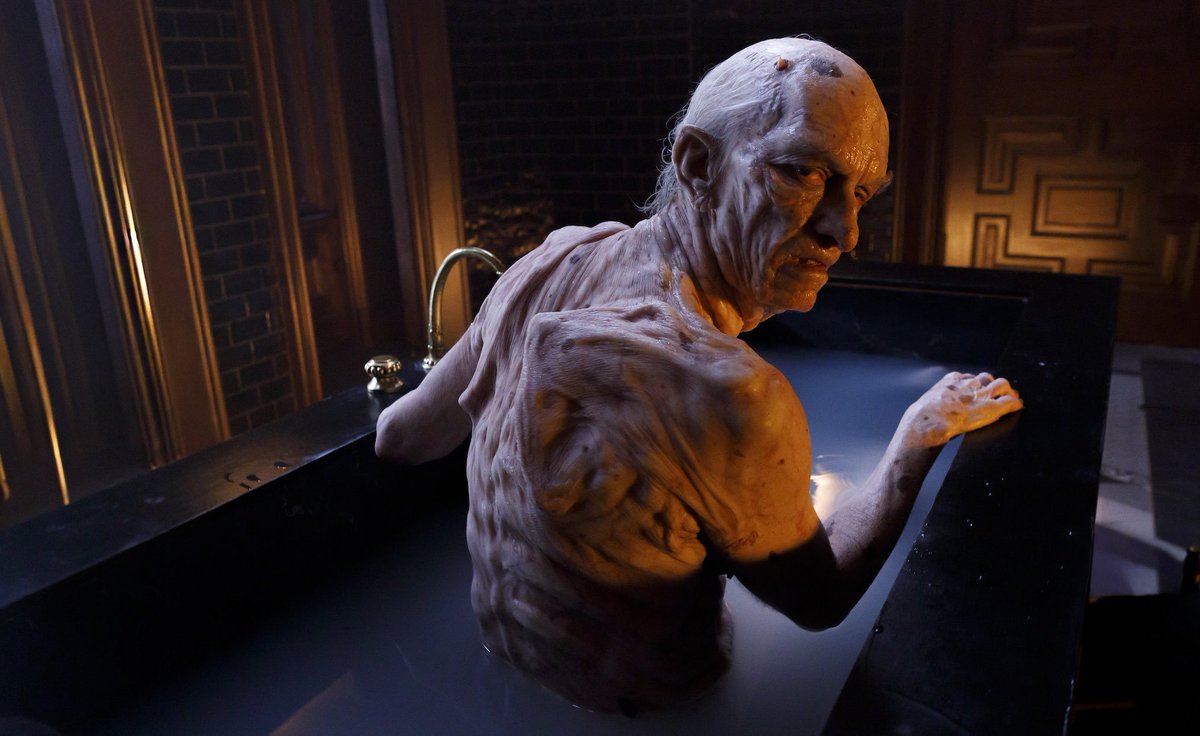
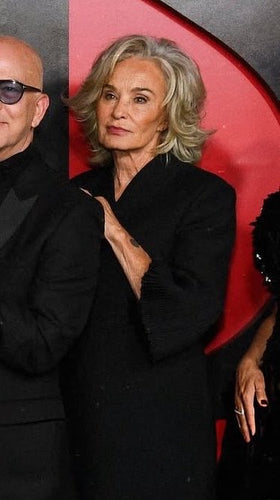
Photo via @GoldCrucifix / @ahsfxoficial on X
Fedor Steer (Mr. Nas) chegou na premiere de #AHS13.
— American Horror Story Brasil (@ahsfxoficial) September 24, 2026
What We Know for Certain
There is a building in Manhattan called the Apollyon. Mr. Nas owns the entire 13th floor. He is 87 years old, or at least that is what Constance claims. He has claw-like hands, a tail, and at moments what appear to be horns. Every time exactly thirteen people die in the outside world, he vomits thick black sludge.
Two of those mass-death events have already been shown: the plane crash that opens the season and Twisty’s clown-school massacre. The timing is exact. The sludge is the only honest reaction the character has given.
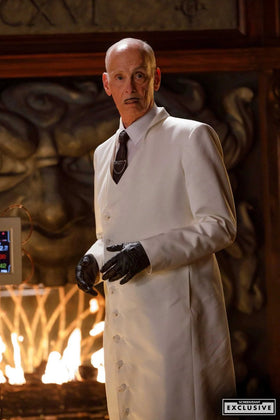
John Waters’ Mr. Phibes arrives every week, draws thirteen vials of blood, and leaves with a bag that also contains live snakes. Constance treats Nas with religious language. “Praise his name and what he has done for the world.”
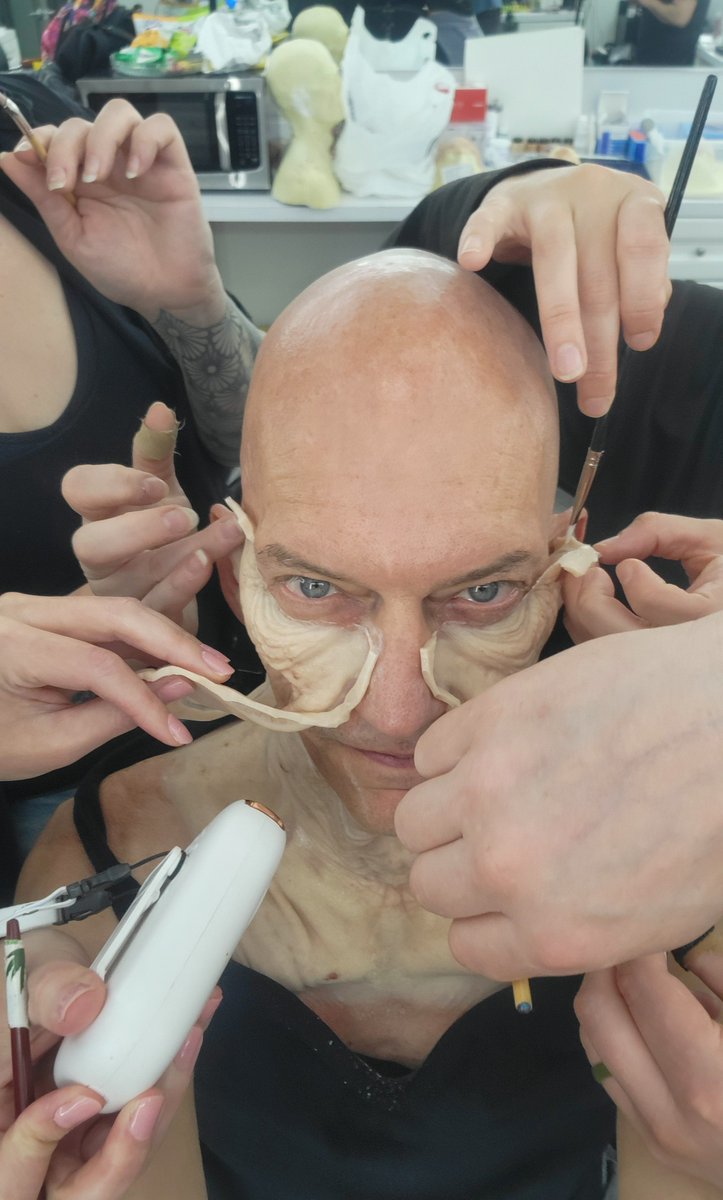
Photo via @fedorsteer on X – actor’s own post
This picture is not posed. It's really like this to get Mr. Nas ready: 4 hours in the makeup chair, 4 people, 8 hands. Except on full-body bathtub days, then it was 6 people, 12 hands, 8 or 9 hours. American Horror Story 13.
— Fedor Steer (@fedorsteer) September 25, 2026
The Ritual Machinery
Constance is not simply a caretaker. On Rauhnacht she hosts a gathering designed to recruit the first of thirteen leading ladies. Elizabeth Short, the Black Dahlia, is the first. She is the only guest who eats the special ham. She is then taken into the basement of the Apollyon, into a place called Club Hell that Wilhemina Venable openly calls a portal to Hell.
The number thirteen is not decoration. It is the operating system. Thirteen deaths. Thirteen vials. Thirteen leading ladies. Thirteen episodes. A building that insists on having a thirteenth floor.
What the Show Is Still Hiding
We do not know what Mr. Nas is. We do not know whether the black sludge is waste, fuel, or something being born. We do not know the full purpose of the thirteen leading ladies once they are assembled. We do not know whether the ultimate evil is Nas himself, something that lives under the Apollyon, or something that Nas is only a vessel for.
Ryan Murphy has said the returning characters are uniting against a force the franchise has “touched on” before but never fully faced. That is the closest thing to a definition the audience has been given. Everything else is inference.
Why the Missing Name Matters
Most seasons of American Horror Story announce their monster early. A haunted house. A coven. An asylum. A hotel. A cult. Season 13 has chosen the opposite approach. It has shown the machinery and refused to name the thing the machinery is serving.
That choice keeps the tension alive. It also risks frustration. After three episodes the audience knows the symptoms of the disease. They still do not know the disease.
The October episodes will have to decide whether the silence is craft or stall. If the ultimate evil remains unnamed for much longer, the black sludge and the special ham will start to feel like the entire point instead of the opening moves.
The Cleanest Summary Right Now
Something is being fed on the 13th floor of the Apollyon. It responds to mass death. It requires blood on a fixed schedule. It is being prepared for by a ritual that collects legendary women. The portal under the building is open. The witches sense the threat. The rest of the franchise’s survivors are being pulled into the same orbit.
The name is still missing. Everything else is already on the table.
What “Ultimate Evil” Has to Earn on Screen
Ryan Murphy’s pre-season language set a high bar: an evil above the Antichrist. Season 13 has started paying that debt in pattern, not slogans. Black sludge after thirteen deaths. Blood drawn on a schedule. A portal under a building. A collection of leading ladies counted toward the same number. The mythology is assembling. What it has not fully done yet is force the audience to feel a presence larger than any single returning face.
That gap is not automatically failure. Premiere week had to reintroduce a decade of characters. October is where an ultimate-evil season has to stop pointing and start pressing. If Mr. Nas remains only a grotesque patient, the phrase stays marketing. If the systems around him — Constance, Phibes, Club Hell — start changing what every other character can afford to want, the phrase becomes story.
The smartest way to watch is to ignore the label for a moment and follow the maintenance. Who feeds the pattern. Who benefits. Who still pretends it is something else. Ultimate evil, in this franchise, is rarely the loudest monster. It is the arrangement that makes the loud monsters useful.
Frequently Asked Questions
Has the ultimate evil been identified in the first three episodes?
No. Ryan Murphy has described it only as a force bigger than the Antichrist that the franchise has touched on before.
Is Mr. Nas the ultimate evil?
The show has not confirmed it. All current evidence points toward him being either the evil itself or its primary vessel.
What is Club Hell?
It is the name given to the space in the basement of the Apollyon that functions as a portal to Hell.
Why does the number 13 keep appearing?
It is the central organizing principle of the season: episode count, death counts, blood draws, leading ladies, and the floor Mr. Nas occupies.
Author: Shivam Das. Independent coverage for U.S. readers. Updated September 28, 2026.