

Spoilers ahead for all six episodes of Netflix’s Below.
At first, Below looks like a familiar creature feature: a remote Newfoundland fishing town, an enormous squid lurking beneath an iceberg, and a fisherman who believes the thing in the water took his father. Then the series reveals a more painful truth. The creature, known as Mudder, is not simply hunting people. She is protecting an egg sac trapped in an iceberg, in water that has become too warm for her young to survive.
That twist changes the central question from “How do they kill the monster?” to “What if the monster is a mother in crisis?” Netflix’s official ending explainer confirms that Mudder’s aggression is tied to her trapped egg sac and that the finale’s resolution is shaped by warming water.

The giant squid twist changes who the real villain is
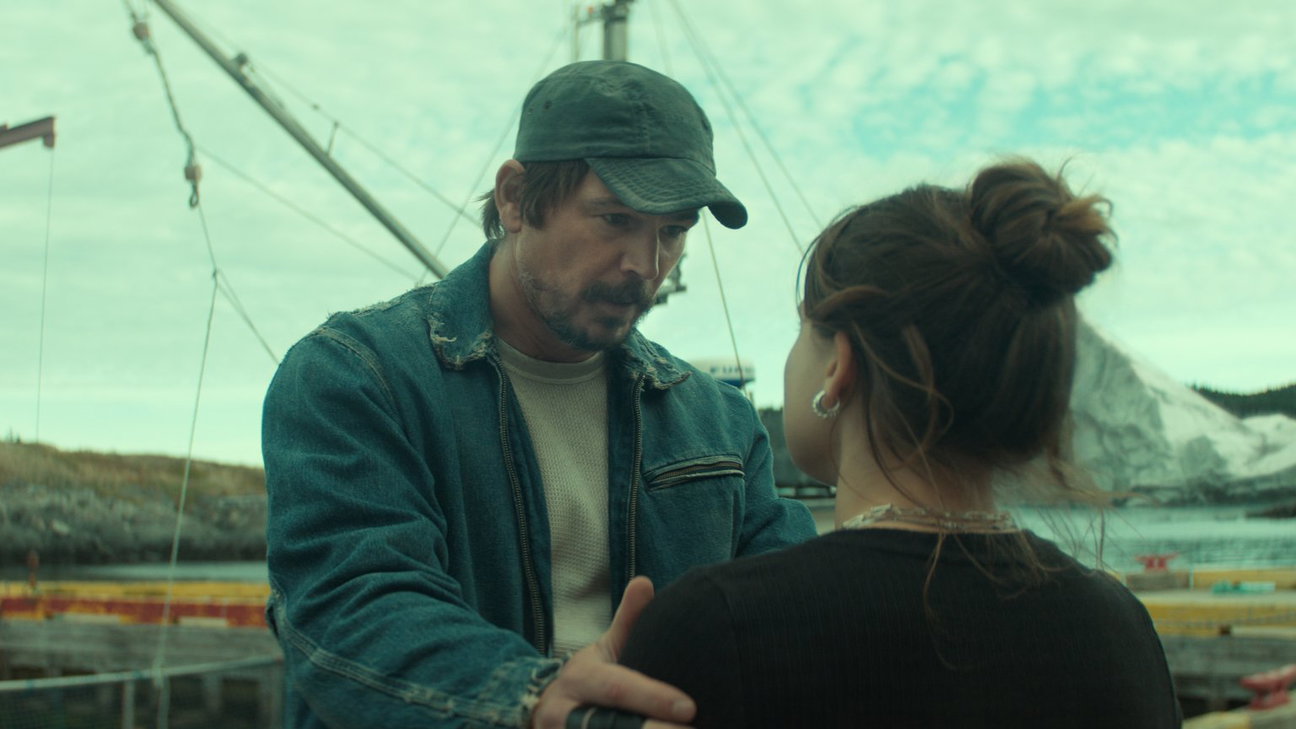
For much of the six-part limited series, strange attacks and disturbing symptoms push Snook’s Arm toward panic. Calvin Penney (Josh Hartnett) has his own reason to fear what lives below: as a child, he saw an underwater force drag his family’s house into the sea, and he has carried guilt over his father’s death ever since.
Marine researcher Fonda Howander (Mackenzie Davis) helps explain the evidence. Mudder is a highly intelligent deep-water cephalopod, and her egg sac is caught in the iceberg. The surrounding water is too warm for her offspring to survive. Her attacks are still dangerous, but the motive behind them is not simple cruelty. She is reacting to a threat to her young.
Why Mudder feels more tragic than terrifying
Creature horror usually asks viewers to fear a predator’s appetite. Below complicates that response by giving Mudder a recognizable instinct: protect the next generation. The show doesn’t make her harmless or erase the people hurt along the way. Instead, it asks viewers to hold two truths at once: a frightened community has real reasons to feel endangered, and the creature may be acting out of desperation rather than malice.
The reveal also changes Calvin. He has spent years interpreting childhood trauma as proof that he is cursed and that the sea took something from him. As he learns more about Mudder and the people manipulating the town, his need for revenge gives way to responsibility. He can’t undo the past, but he can choose not to repeat its violence.

Fonda’s discovery reframes the finale
Fonda insists on understanding before destroying. When the military prepares to eliminate the threat, she argues that Mudder deserves to be studied rather than bombed. Her scientific perspective doesn’t dismiss the danger; it reveals what the creature is protecting and why a blunt attack could devastate the harbor along with the animal.
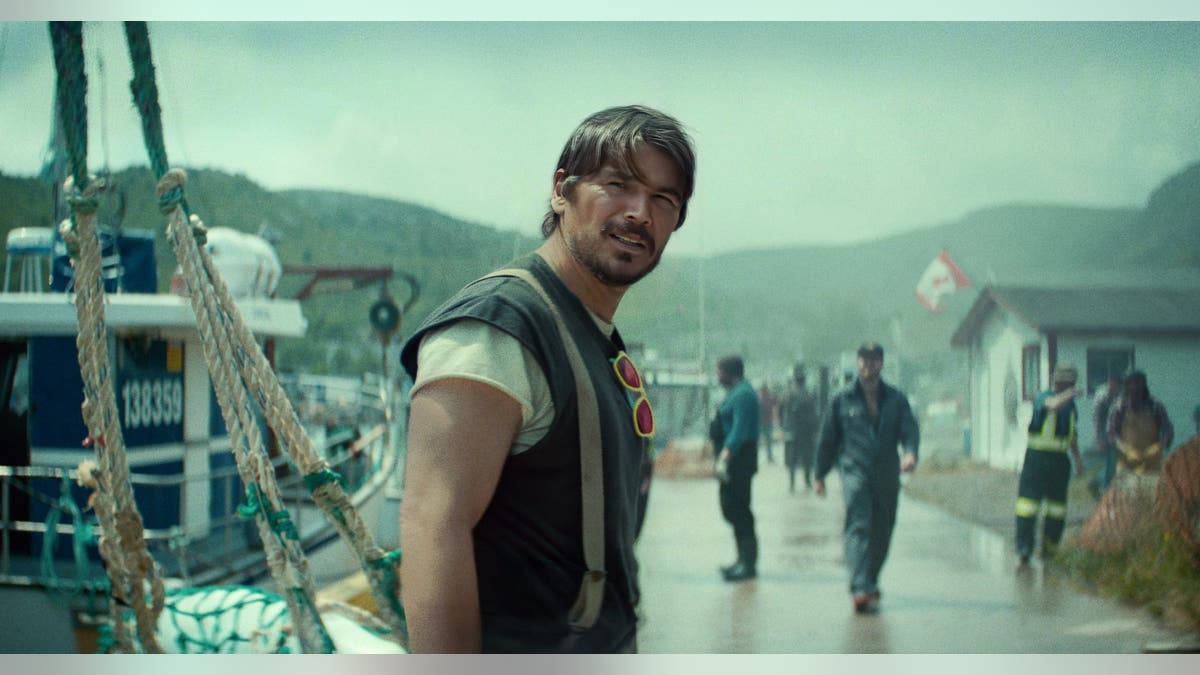
The family’s plan is risky but compassionate. They break the massive iceberg into smaller pieces and use Calvin’s fishing boat and a net to tow the section containing the egg sac toward deeper, colder water. The act echoes the series’ opening image of a house being towed across the bay. At the beginning, a line is cut in a desperate attempt to save a family. In the finale, Calvin cuts a line after choosing to give another family a chance.
The heartbreaking detail: saving the mother doesn’t save the babies
The ending refuses to turn compassion into an easy victory. Mudder is moved away from the immediate threat, but Fonda later explains that the hatchlings have not survived the warm water. The rescue matters, yet it cannot reverse the conditions that made the crisis possible. That is what makes the twist more emotional than scary: the creature’s desperate behavior has a purpose, and that purpose still ends in loss.
The environmental message is woven into the plot rather than delivered as a separate lecture. Water temperature determines whether the next generation can live. Netflix’s feature on the real-world science behind Mudder notes that actual giant squid are elusive deep-sea animals and that warming water and changing ocean chemistry can affect marine life. The show’s monster is fictional, but the pressure placed on ocean ecosystems is not.

The creature is not the only threat
As Calvin uncovers the truth, the Crocker family’s scheme to push residents out of Snook’s Arm becomes another kind of horror. The creature is visible and frightening; corporate power is quieter, using fear and the town’s vulnerability to make displacement easier. The series suggests that the most destructive force may not be the one with tentacles, but the people willing to exploit a crisis for profit.
That parallel is why Mudder’s story resonates beyond the finale’s spectacle. She is dangerous, but she is also vulnerable. The town is threatened by a creature, yet it is also threatened by people who see its land as a resource and its residents as obstacles. Both conflicts ask whether survival means destroying whatever looks threatening—or taking the time to understand what is actually happening.
What the giant squid twist really means
Mudder’s reveal is not a last-minute excuse for every attack. It is a change in perspective. The creature can be frightening and still be driven by a comprehensible need; humans can be scared and still be responsible for what they choose to do next. Calvin’s decision to move the egg sac rather than destroy it is the clearest sign that he has changed.
But the loss of the hatchlings leaves the ending bittersweet. A brave rescue cannot solve warming seas, restore what has already died, or guarantee that the town will be left alone. The final icebergs suggest that more mysteries—and more consequences—may be on the way. Mudder’s story is emotional because it ends not with a triumphant kill, but with a reminder that understanding a threat is only the first step toward changing the conditions that created it.
Quick answer: Why is Below’s giant squid twist so emotional?
Mudder is revealed as a mother protecting her trapped egg sac, not simply a monster attacking people. Calvin and Fonda try to save her and her young by moving the iceberg to deeper water, but the hatchlings do not survive the warming conditions. The twist turns a creature-feature climax into a tragic story about parenthood, empathy, and environmental loss.
Frequently asked questions
Is the giant squid in Below evil?
No. Mudder is dangerous, but the story reveals that she is protecting her egg sac. Her actions are driven by a desperate maternal instinct rather than a straightforward desire to kill people.
Why does Mudder attack Snook’s Arm?
Her secretions contaminate ice and water, causing severe symptoms that draw people toward the sea. Her aggression is also connected to the threat to her egg sac, trapped in an iceberg in water too warm for her young.
Does Calvin kill the giant squid?
No. Calvin chooses to tow the part of the iceberg containing Mudder’s egg sac toward deeper water rather than help destroy her. The finale frames that choice as an act of empathy and redemption.
Do Mudder’s babies survive?
No. Fonda explains that the water is too warm for the hatchlings to survive. That outcome is central to the series’ tragic environmental message.
Is Below based on a real giant squid story?
No, Mudder and the series’ events are fictional. However, giant squid are real deep-sea animals, and the show draws on real scientific concerns about changing ocean conditions.
Sources and further reading
- Netflix Tudum: Below ending explained
- Netflix Tudum: Could the sea creature in Below really exist?
- Netflix Tudum: Below cast, story, and first-look photos
Author: Shivam Das






