

The iceberg monster in Netflix’s Below is fictional, but several details behind the show’s terrifying sea creature are rooted in real marine biology. Giant squid really exist, they are extraordinarily difficult to observe in the deep ocean, and cephalopods can display complex behaviors around reproduction and survival. The science becomes much less realistic when the series turns those facts into a creature that threatens a Newfoundland town and ties its fate to an iceberg.
Netflix’s Tudum spoke with marine biologist Dr. Annie Mercier of Memorial University’s Ocean Sciences Centre, who advised creator Jesse McKeown on the series. Mercier’s explanation offers a useful way to separate what scientists know about giant squid from what Below invents for horror.
1. Giant squid are real—and still hard to study
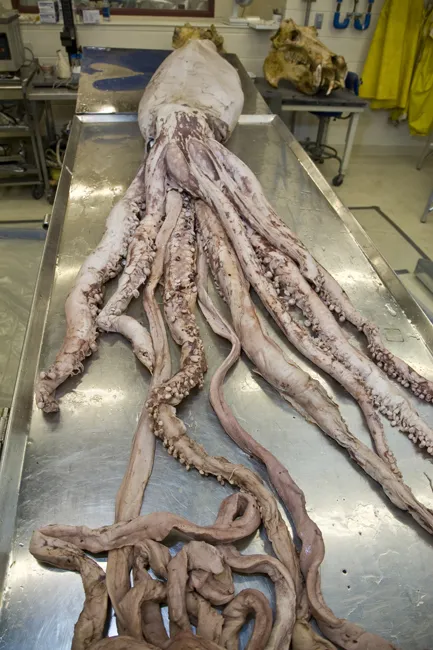
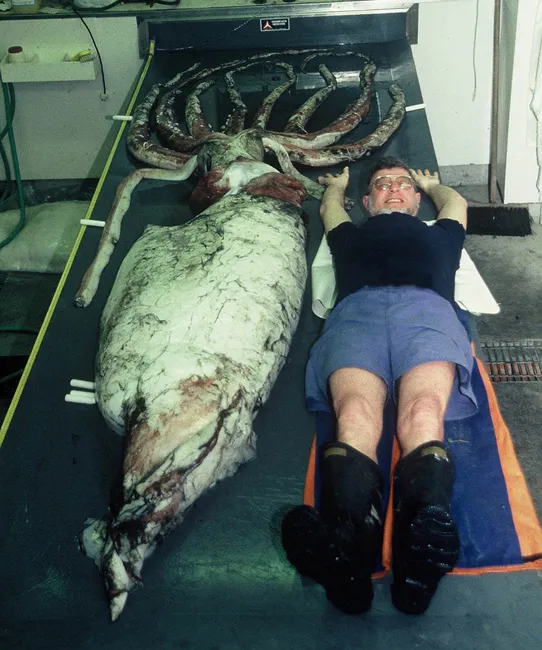
The first scientific reality behind Below is the animal itself. Giant squid (Architeuthis dux) are not folklore. Smithsonian scientists report that the largest confirmed specimens have reached roughly 43 feet (13 meters) from the tip of the mantle to the ends of the tentacles. Some estimates based on indirect evidence suggest larger animals might be possible, but a 66-foot giant squid has not been documented.
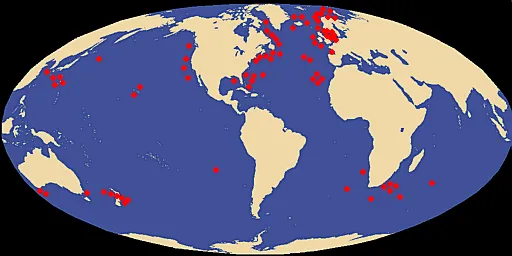
The ocean’s size and the squid’s deep-water habitat explain why sightings are rare. Much of what researchers know comes from carcasses found at sea or washed ashore, rather than from watching healthy animals in their natural environment. Researchers filmed a living giant squid in its habitat in 2012, an important milestone after years of searching.
That uncertainty is fertile ground for a thriller. A real animal can be astonishing without being supernatural; the show builds its horror by imagining what might happen if a rare deep-sea creature behaved in ways scientists have never observed.
2. The creature’s size is plausible; its attacks are not
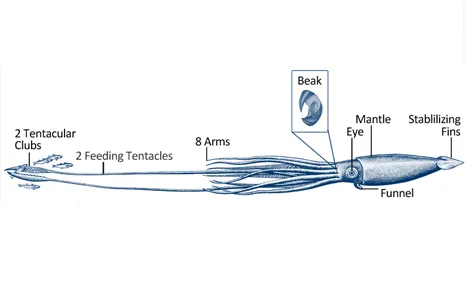
Giant squid have eight arms, two long feeding tentacles, a sharp beak, and enormous eyes adapted to dim conditions. Their tentacles can seize prey at a distance, while their soft bodies allow them to move through water using jet propulsion. These features are striking enough to inspire sea-monster stories.
But size does not mean a giant squid is an unstoppable underwater wrestler. Smithsonian squid expert Clyde Roper has noted that the animals’ muscular structure and body composition do not support the idea that they would have the extraordinary strength people often imagine. And, according to Mercier’s comments to Netflix, a giant squid is very unlikely to leave its aquatic environment to attack people on land. The show’s violent encounters are dramatic invention, not documented giant-squid behavior.
3. The mother-and-egg story borrows from cephalopod biology
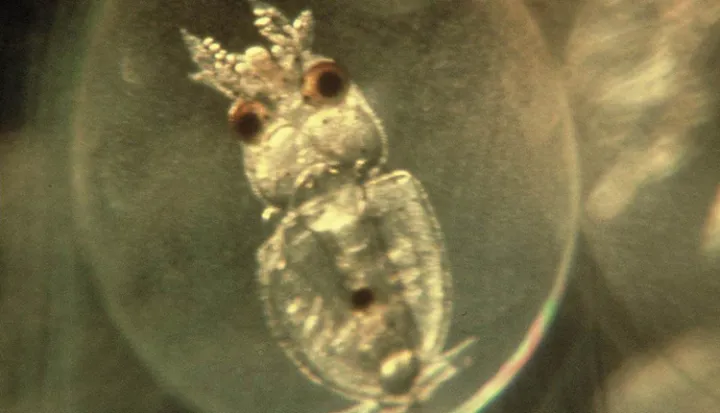
Below gives its creature a motive beyond simple aggression: it is protecting offspring, and its egg mass is in danger as the surrounding water warms. The emotional logic is fictional, but parental investment is a real part of cephalopod biology.
Different squid and octopus species reproduce in different ways, so there is no single life cycle that applies to every cephalopod. Some species guard eggs, maintain them by moving water over them, or spend much of their remaining energy protecting the next generation. Some cephalopods die after reproducing. That makes a parent creature weakening while tending its eggs a biologically inspired idea, although the series’ exact giant-squid behavior and iceberg-bound egg sac should not be treated as a scientific case study.
4. Could warming water threaten squid eggs?
This is where Below connects its monster story to a genuine environmental concern. Ocean temperature affects marine animals’ metabolism, development, geographic range, and access to suitable habitat. Warmer water also holds less dissolved oxygen than colder water, while climate change is altering ocean chemistry as well. The combined effects can change where marine species can survive and how their life cycles unfold.
That does not mean scientists have documented a giant-squid egg sac trapped inside an iceberg, or that a single iceberg could cause the exact crisis shown in the series. Those details are invented for the plot. The broader point—that warming seas can affect marine life and the survival of young animals—is real. Mercier told Netflix that temperature, oxygen availability, and changing water chemistry all matter when considering the distribution and livelihoods of ocean species.
5. Why an iceberg makes such an effective horror setting
Icebergs are real, mobile masses of glacial ice, and Newfoundland and Labrador are known for them. The Labrador Current carries icebergs south from Greenland and Arctic waters, creating the region’s famous seasonal iceberg displays. An iceberg can also be unstable: pieces may break away, and a berg can roll as its balance changes.
What is not real is the series’ suggestion that an iceberg could function as a hidden nursery for a monster in the precise way shown on screen. The setting combines two powerful images—the apparent stillness of ancient ice and the poorly explored deep sea—to make the creature feel as if it belongs to a world humans barely understand. That is an effective storytelling choice, not a scientific conclusion.

6. The real science—and the fictional leap
Here is the simplest way to read the science behind Below: giant squid exist; they are elusive; their anatomy is genuinely extraordinary; and cephalopod reproduction is complex. Ocean warming and changing chemistry are real pressures on marine ecosystems. The evidence does not support a giant squid attacking a town, surviving in an iceberg-bound egg sac, or deliberately targeting people in the way the show depicts.
That distinction makes the series’ environmental horror more interesting, not less. The creature is a fictional threat, while the uncertainty of deep-sea research and the vulnerability of ocean ecosystems are real. The show takes those facts and stretches them into a nightmare about what can happen when a community’s future and the natural world collide.
Watch the official Below trailer
Netflix’s trailer introduces the coastal setting and the mystery at the center of the series. For the scientific background, read Netflix Tudum’s interview with marine biologist Annie Mercier, and compare it with the Smithsonian Ocean guide to giant squid.
Real iceberg photos from Newfoundland and Labrador
The iceberg setting is inspired by a real feature of the region. The tourism account below shares iceberg imagery from Newfoundland and Labrador; it is an authentic social-media post, not footage from the series.
Frequently asked questions
Is the monster in Below based on a real animal?
The creature is fictional, but its giant-squid inspiration is real. Giant squid can reach about 43 feet (13 meters) in total length, have enormous eyes, and live in deep ocean waters where they are rarely observed.
Can a giant squid attack humans like it does in Below?
There is no good evidence that giant squid hunt people or attack coastal communities. The aggressive behavior shown in the series is a fictional horror element.
Can climate change affect squid and other marine animals?
Yes. Temperature, oxygen availability, and changing ocean chemistry can influence marine species’ distribution, development, and survival. The exact iceberg-and-egg-sac crisis in Below, however, is fictional.
Are there really icebergs near Newfoundland?
Yes. Icebergs travel south from Greenland and Arctic waters with the Labrador Current and are often visible along parts of Newfoundland and Labrador in spring and early summer. Their timing varies with currents and weather.
Sources
- Netflix Tudum: Could the Sea Creature in Below Really Exist?
- Smithsonian Ocean: Giant Squid
- Smithsonian National Museum of Natural History: The Giant Squid
- Visit Newfoundland and Labrador: Iceberg photos and viewing information
By Shivam Das






