By Shivam Das | Updated October 11, 2026
Quick answer: A candle warmer lamp can reduce how quickly a jar’s wax is consumed, but it is not automatically cheaper overall. A 50-watt warmer used four hours a day consumes about 6 kilowatt-hours a month. At an example electricity rate of $0.17/kWh, that is about $1.02 per month, before bulb replacements and the warmer’s purchase price. The real savings depend on how much longer the candle’s fragrance remains useful, how often you use the lamp, and your local electricity rate.
Comparing a warmer with a burning wick means looking beyond the candle’s sticker price. Burning consumes wax as fuel; a warmer melts the wax from above without using it up in the same way. However, fragrance compounds still evaporate over time, so a jar can remain full of wax after much of its scent has faded. A fair cost comparison counts useful fragrance hours—not just how long wax remains in the container.

What costs money in each method?
Traditional candle burning
- The candle itself, replaced when the wax is consumed.
- Matches or a lighter, usually a small expense.
- Potentially wasted wax if the candle tunnels or burns unevenly.
- No electricity needed for the candle itself.
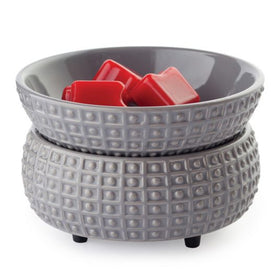
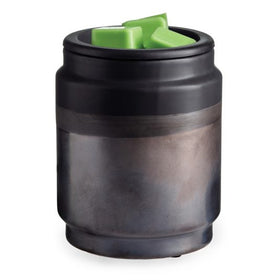
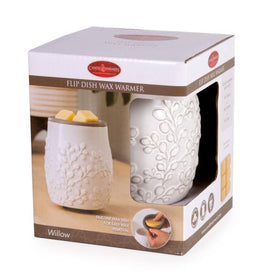
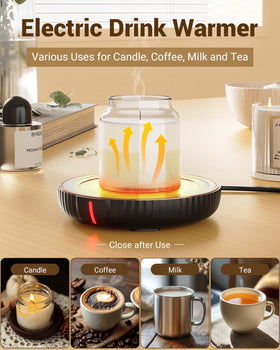
Candle warmer lamp
- The candle and the warmer’s upfront purchase price.
- Electricity for the bulb or heating element.
- Replacement bulbs when the model uses a replaceable bulb.
- Possible wax removal or disposal once the fragrance has faded.

How much does a candle warmer cost to run?
Use this simple formula:
Monthly electricity cost = (watts ÷ 1,000) × hours used per day × days per month × electricity price per kWh.
The table below uses an illustrative electricity price of $0.17 per kilowatt-hour and a 30-day month. Your utility rate may be higher or lower, and a dimmer can change actual power draw depending on the device.
| Warmer power | Daily use | Monthly energy | Example monthly cost |
|---|---|---|---|
| 25 watts | 4 hours | 3 kWh | $0.51 |
| 35 watts | 4 hours | 4.2 kWh | $0.71 |
| 50 watts | 4 hours | 6 kWh | $1.02 |
| 50 watts | 8 hours | 12 kWh | $2.04 |
These are energy estimates, not a measured bill. To estimate your own cost, replace $0.17 with the price on your utility bill and use the wattage and hours that match your routine. For example, a 50-watt lamp running four hours daily uses 0.2 kWh per day, or around 6 kWh over 30 days.

Does a warmer make a candle last longer?
It often makes the wax last longer because the wax is melted and then solidifies again rather than being consumed by a wick flame. But “lasts longer” needs a definition. The candle may retain most of its wax while releasing less and less fragrance as the volatile scent compounds are depleted. At that point, the jar may look nearly new but no longer provide the fragrance you bought it for.
That means claims such as “two or three times longer” should be treated as product- or user-specific, not a guaranteed multiplier for every wax formula, fragrance load, warmer, or room. Soy, paraffin, coconut blends, fragrance concentration, lamp height, heat setting, and session length can all affect the result. The most useful measure is how many hours the candle gives you the scent level you consider worthwhile.

A simple break-even example
Suppose a jar candle costs $24 and provides 40 hours of useful fragrance when burned. Its candle cost is $0.60 per useful fragrance hour, before lighter costs. Now suppose a warmer allows that same candle to provide 70 useful fragrance hours. The candle cost becomes about $0.34 per useful hour—but the warmer also adds electricity, bulb replacement, and equipment cost.
With a 50-watt lamp used for four hours a day at $0.17/kWh, electricity costs about $1.02 for 20 days of use. If the warmer adds only a few useful fragrance hours, those extra costs could erase the savings. If it meaningfully extends the candle’s useful scent life and you use it often, the economics may look better. These figures are a worked example, not a controlled test or a prediction for every candle.
For a more complete comparison, include the purchase price of the warmer and spread it over the number of months you expect to use it. If the lamp costs $30 and you use it for 24 months, that is an additional $1.25 per month before electricity and bulbs. If you rarely use the warmer, its cost per session will be higher.

What real candle users say
Public discussions show why a single savings claim can be misleading. Some users say they get more use from a jar because the wax remains after warming; others point out that fragrance fades and the leftover wax may need to be removed. Some prefer the open flame for atmosphere, while others prefer a warmer for convenience. These are personal reports rather than standardized tests.
Read the original Reddit cost discussion. The thread is a community calculation, not an authoritative energy audit; its assumptions may not match current rates or your warmer.
Safety and convenience also have value
A warmer avoids a lit wick and open flame while it is operating, but it is still a heat-producing electrical appliance. The bulb, shade, wax, and jar can become hot. Use the device according to its manual, keep it away from combustible materials, and switch it off when finished. A timer can help manage sessions but does not make unattended operation risk-free.
Traditional candles offer something a warmer cannot reproduce: the moving flame and the ritual of lighting a wick. If that visual atmosphere is the main reason you buy candles, a warmer may not replace the experience even if it reduces wax consumption.
Which option is cheaper for you?
- Choose a warmer if: you already own jar candles, use fragrance regularly, and your candle’s scent remains useful for substantially longer under warming.
- Choose traditional burning if: you mainly value the flame, use candles infrequently, or do not want to pay for an appliance and electricity.
- Use a hybrid approach if: you enjoy both the flame and the warmer. Keep the wick and warmer use separate; never light the wick while the candle is under the lamp.
Frequently asked questions
Is a candle warmer cheaper than burning a candle?
It can be, but not always. The answer depends on the candle’s useful fragrance life under each method, electricity price, hours of use, warmer purchase price, and replacement bulbs.
How much electricity does a 50-watt candle warmer use?
At four hours per day for 30 days, a 50-watt lamp uses about 6 kWh. At an illustrative $0.17/kWh, that is about $1.02 per month.
Does candle wax last forever under a warmer?
No. Wax may remain because it is not burned as fuel, but fragrance compounds gradually evaporate. Eventually the wax can remain while the scent becomes weak.
Does a warmer guarantee two or three times more candle life?
No. Results vary by candle formula, fragrance load, warmer temperature, height, and usage. Treat multipliers as claims to verify, not a universal guarantee.
Does a candle warmer remove every safety risk?
No. It removes the open wick flame during warming, but hot surfaces and electrical risks remain. Follow the manual and switch it off when finished.
Sources and further reading
- The Spruce: Candle warmers versus burning candles
- House Beautiful: Candle warmer versus burning candles
- National Candle Association: Candle safety information
- Reddit: community cost calculation discussion
- Reddit: recent user discussion comparing burning and warming
Editorial note: Written by Shivam Das. This is a research-based cost guide, not a controlled laboratory test. The electricity rate is an illustrative assumption, not a national average or a quote for your home. Product photos and lifestyle imagery are illustrative; no pictured person is represented as a verified tester. Third-party image licensing has not been independently confirmed.