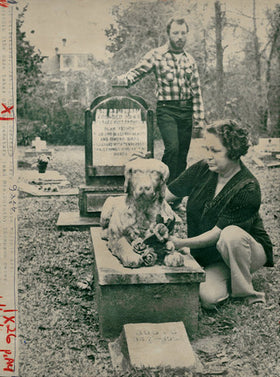
When a decades-old murder returns to television, the story is not told by investigators alone. Local reporters, editors, photographers and archivists help preserve the first public record of a case—often through brief articles written while facts are still emerging. HBO’s The Pet Cemetery Murders: A Ghost Story revisits Dorothy Lou Thompson’s 1985 killing, but an important question remains: which journalists from the original coverage are actually identified as participants in the new series?
The HBO series announcement says featured participants include friends, family members and neighbors of Thompson, law-enforcement officers, historians, artists, journalists and attorneys. However, the announcement does not name those journalists or specifically confirm that reporters who covered the case in 1985 are returning to speak on camera. This article separates that confirmed information from the broader headline premise rather than inventing names or quotes.
What HBO has confirmed about journalists in the series
The official series announcement lists journalists among the documentary’s featured participants, alongside law-enforcement officers, attorneys, historians, artists and people who knew Thompson. That confirms journalism is part of the documentary’s wider perspective. It does not, by itself, establish that a particular reporter covered the original 1985 investigation or that the person is speaking publicly for the first time.
Until an episode credit, transcript or named interview confirms identities and roles, it would be misleading to attribute a new statement to an unnamed journalist. Read the series announcement and participant description.
The original reporting: what can be documented
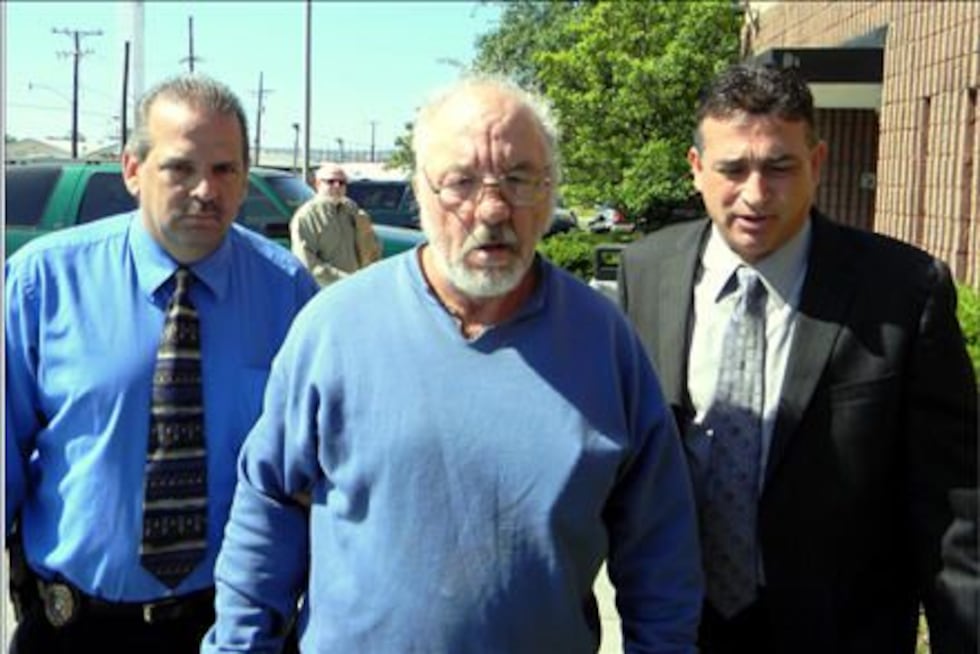
Thompson disappeared in April 1985, and her body was found in the Mississippi River on May 2. The case did not result in an arrest at the time. In 2009, investigators reopened it; Nodier was indicted in 2012 and entered a manslaughter plea in July 2014, receiving a 10-year sentence.
Contemporary news coverage preserved the public milestones. For example, WDSU’s July 11, 2014 report identifies reporter Andy Cunningham and summarizes the plea deal and sentence. That is a verifiable example of a journalist covering the case’s resolution—not proof that Cunningham reported the original 1985 disappearance or appears in the HBO documentary.
Read WDSU’s report by Andy Cunningham.
Why local journalism matters in a cold case
Local outlets are often closest to the courthouse, sheriff’s office, family members and community witnesses. Their early reporting can record names, dates, official statements and the questions investigators were publicly willing to answer. When a case is reopened years later, those stories provide a timeline against which new claims can be checked.
But archival reporting must be read with care. Early accounts may reflect only what authorities knew at the time; later evidence can change the picture. An allegation in a news report is not the same as a court finding, and an arrest or indictment is not a conviction. In Thompson’s case, the final documented plea was to manslaughter, not a jury verdict for second-degree murder.
What remains to be confirmed
Publicly available promotional material reviewed for this article does not name the journalists in the documentary or establish which of them reported on Thompson’s murder in 1985. The most reliable way to verify that detail is to check the episode credits, on-screen introductions and full interviews after the relevant episodes air. We will not fabricate a reporter’s identity, quote or social-media post to fill that gap.
Similarly, no specific Twitter/X or Instagram post from a named 1985 reporter was verified for this article. The official sheriff’s office post below relates to the case, and the video embed is the series trailer; neither should be mistaken for a journalist’s personal testimony.
Official social post and trailer
The St. Bernard Parish Sheriff’s Office has published information about the cold-case investigation and the department’s participation in the HBO documentary. The post is an official law-enforcement source, not a journalist interview.
Open the St. Bernard Parish Sheriff’s Office Facebook post.
Sources and further reading
- HBO series announcement — schedule and featured participant categories
- St. Bernard Parish Sheriff’s Office — Deputy Chief John Doran featured in documentary
- WDSU — Andy Cunningham’s 2014 plea-deal report
- FOX 8 — 2014 sentencing report
- Autopsy of Architecture — cemetery history and archival photographs
Accuracy note: The headline reflects the user-requested topic. Available public material confirms that journalists are among the series participants, but it does not yet identify them as reporters from the original 1985 coverage. This article makes that limitation explicit rather than presenting an unverified claim as fact.