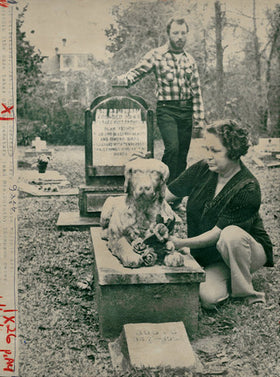
What makes a three-part true-crime documentary worth three weeks of viewing instead of one feature-length film? For writer-director Philip Cairney, the story behind HBO’s The Pet Cemetery Murders: A Ghost Story contains more than one mystery: the 1985 killing of Dorothy Lou Thompson, the witness accounts that helped revive the cold case, and the wider history attached to the land where her family ran a pet cemetery.
Important context: HBO’s public announcement confirms that Cairney directed and wrote the three-part series, produced by Lightbox for HBO Documentary Films. The announcement does not spell out a personal, definitive explanation from Cairney for choosing exactly three episodes. This article separates what is documented about the series from a reasoned reading of its structure—and includes a recent interview where Cairney discusses the story’s layers and paranormal claims.
Who is Philip Cairney?
Philip Cairney is the writer and director of The Pet Cemetery Murders: A Ghost Story. HBO’s series announcement also credits him as director and writer, while naming Lightbox as the production company and Simon Chinn, Jonathan Chinn, Suzanne Lavery, James Marsh and Silvia Sacco among the executive producers. The series is a documentary investigation shaped by a filmmaker and supported by a larger production and editorial team.
That distinction matters: a director can shape questions, pacing, interviews and visual language, but a published press release alone cannot establish every creative decision or prove a specific motive behind the episode count.
Why tell the story across three episodes?
The official episode descriptions suggest a clear narrative progression. Episode 1 introduces the decades-old cold case and the account that helps investigators revisit it. Episode 2 follows investigative progress and an unexpected witness admission. Episode 3 widens the frame to the trail of violence, alleged mob connections and the community’s difficult history. HBO scheduled the episodes for October 11, 18 and 25, 2026, at 9 p.m. ET/PT.
That structure gives the story room to move through three kinds of material without treating them as interchangeable:
- The crime: What is documented about Dorothy’s disappearance and death?
- The investigation: What information did witnesses provide, and how did investigators assess it?
- The setting and memory: Why do the cemetery, local history and supernatural accounts continue to shape how people talk about the case?
This is an editorial interpretation of the published episode summaries, not a direct quotation from Cairney about his private planning process. It is also a useful way for viewers to evaluate whether the series earns its three-part format: each episode should add evidence or context rather than simply repeat the same mystery.
Cairney’s interview: the paranormal element is part of the story, not proof by itself
In a recent Legally Brunette podcast interview, host Jennifer Fessler speaks with Cairney about the series’ layered storytelling, the site’s history, Hurricane Katrina’s impact on the community, and the two men who independently described alleged ghostly visitations. The interview summary says the conversation also considers how to weigh rational explanations against paranormal interpretations.
That is an important distinction for a true-crime audience. Witnesses’ descriptions of supernatural experiences may explain why they came forward or how they understood their memories, but a ghost story is not, by itself, independently verifiable evidence of a crime. The factual question is what information witnesses supplied and how investigators corroborated it.
Listen to the interview: Killer Thriller Docu: Did a ghost help solve a murder? — Spreaker. The episode page identifies Cairney as the guest and describes the discussion of the documentary’s case and paranormal elements.
Why the cemetery’s history expands the story beyond one murder
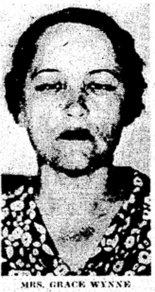
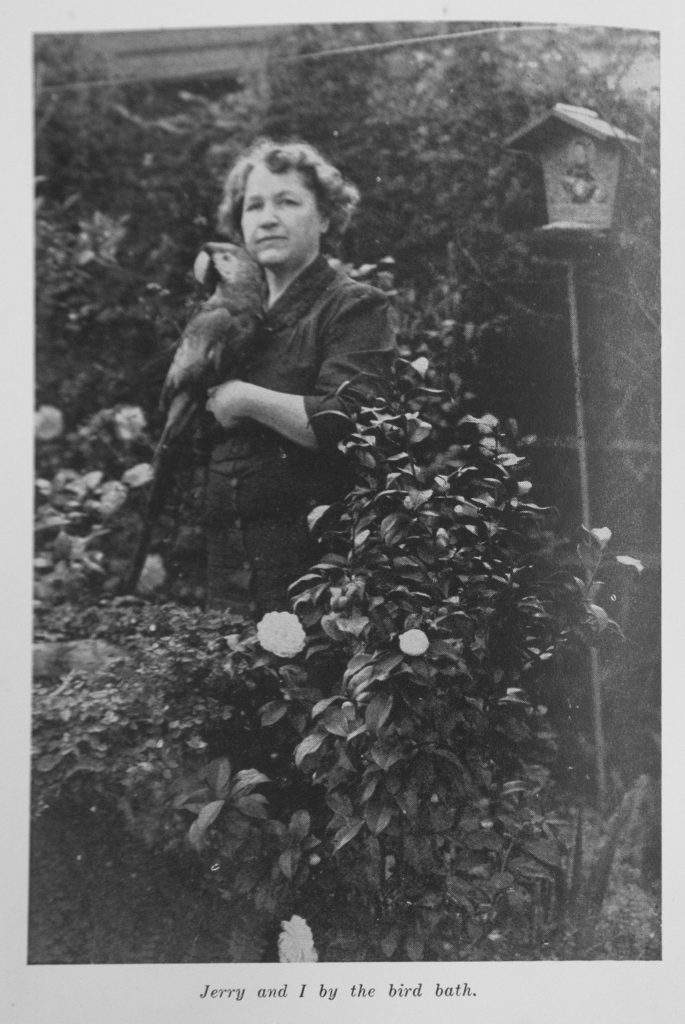
HBO’s synopsis frames the series as both a cold-case investigation and a portrait of a community with a long, violent history. The cemetery is not merely a spooky backdrop: it connects Dorothy, her mother Grace, the land dispute, local memories and accounts of other violence. The documentary’s challenge is to show which parts of that history are documented, which are allegations, and which belong to folklore.
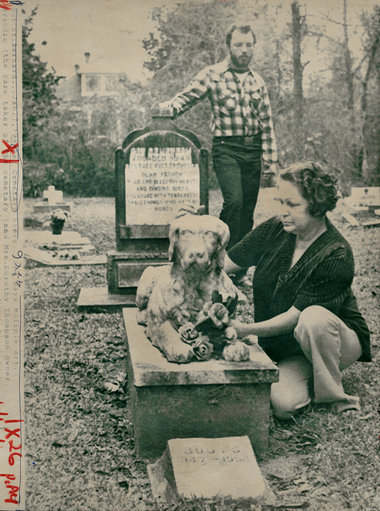
Historical reporting on the Azalea Original Pet Cemetery records its origins around 1950 and describes the site’s deterioration over time. The same account documents the dispute over the property before Dorothy disappeared. Those details provide context for the investigation, but they should not be used to imply that every legend attached to the land is true.
Official trailer and case update
Watch the official series trailer below, then consult the sheriff’s office post and contemporary reporting for the case timeline. These materials are useful alongside the documentary because they let viewers distinguish the show’s storytelling from public records and law-enforcement statements.
Official social post: St. Bernard Parish Sheriff’s Office Facebook post. If Facebook blocks an embedded post in a browser, use the direct link.
What viewers should look for across the three parts
- Does each episode clearly separate verified facts from witness recollections?
- Does the series explain how investigators assessed the information that revived the case?
- Does the local history help explain the investigation, or does it mainly add atmosphere?
- Are paranormal accounts presented as personal testimony rather than scientific proof?
- Does the final episode make clear that Nodier’s 2014 plea was to manslaughter, not the original second-degree murder charge?
The most defensible answer to “why three parts?” is that HBO’s own episode descriptions divide the material into the initial case, a developing investigation, and the broader history uncovered around it. Cairney’s recent interview offers a window into the themes he explored, but no public source reviewed here establishes a single official statement saying this was the sole reason for the format.
Sources and further reading
- HBO official series page — title and premiere information.
- HBO series announcement republished by BroadwayWorld — credits and episode descriptions.
- Legally Brunette interview with Philip Cairney — director interview.
- Abandoned Atlas Foundation — historical account and archival photographs.
- FOX 8, 2012 — indictment and investigator comments.
- FOX 8, 2014 — manslaughter plea and sentence.
Editorial note: This article is based on publicly available announcements, reporting and historical material. It does not claim to know Cairney’s private intentions beyond what he or the production has publicly stated.