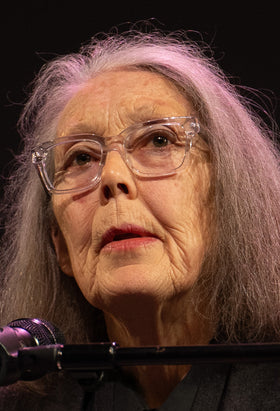
Anne Carson did not arrive at the 2026 Nobel Prize in Literature as an unknown writer. For decades, the Canadian poet, essayist, classicist and translator had collected major literary prizes, fellowships and international honors. The Nobel is the largest recognition of her career, but it sits on top of a long record of achievement that includes the Lannan Literary Award, Pushcart Prize, Griffin Poetry Prize, Guggenheim Fellowship, MacArthur Fellowship and the 2020 Princess of Asturias Award for Literature. citeturn0search0turn0search1turn0news16

Anne Carson awards before the Nobel Prize at a glance
- 1996: Lannan Literary Award for Poetry
- 1997: Pushcart Prize for poetry
- 1998: Guggenheim Fellowship
- 2000: MacArthur Fellowship
- 2001: Griffin Poetry Prize and T. S. Eliot Prize for Poetry
- 2014: Griffin Poetry Prize for Red Doc>
- 2020: Princess of Asturias Award for Literature
- 2024: National Book Award finalist for Wrong Norma
- 2026: Nobel Prize in Literature
The exact list is broader than this quick timeline, but these milestones show how long Carson had been receiving major recognition before the Nobel announcement. citeturn0search0turn0search1turn0search3
1996: Lannan Literary Award for Poetry
One of Carson’s important early major honors was the 1996 Lannan Literary Award for Poetry. The Lannan Foundation lists Carson among its award recipients and identifies the honor as part of the early recognition that established her as a major contemporary poet. citeturn0search2
At that point, Carson had already developed a distinctive literary identity built around Classics scholarship, poetry and translation. Her first book, Eros the Bittersweet, had appeared in 1986 and explored eros through ancient Greek literature and philosophy.
1997: Pushcart Prize
Carson received a Pushcart Prize for poetry in 1997. The Griffin Poetry Prize biography and Academy of American Poets both list the Pushcart among her major early honors. citeturn0search1turn0search0
The recognition came during the period when Carson’s reputation was rapidly expanding beyond Classics and into the wider poetry world.
1998: Guggenheim Fellowship
In 1998, Carson received a Guggenheim Fellowship. The Lannan Foundation and Academy of American Poets both include the fellowship among her major honors. citeturn0search2turn0search0
That same period was important for another reason: Autobiography of Red appeared in 1998. The book would become one of the defining works of her career, transforming the ancient Geryon and Herakles story into a modern verse novel.
2000: MacArthur Fellowship
Carson received a MacArthur Fellowship in 2000. The award, often associated with the phrase “genius grant,” was another major indication that her unusual combination of scholarship and literary experimentation had attracted attention well beyond the poetry establishment. citeturn0search1turn0search9
Her MacArthur recognition came before some of the later international prizes that would make her one of the most decorated experimental poets of her generation.
2001: Griffin Poetry Prize
Carson won the 2001 Griffin Poetry Prize for Men in the Off Hours. The Griffin Poetry Prize identifies the book as its Canadian winner, and Poetry Foundation also records the award. citeturn0search1turn0search9
Men in the Off Hours is a useful example of why Carson was already difficult to categorize. It combines poems, verse essays, epitaphs, prose and other forms, bringing historical figures, artists and private experience into the same literary space.
2001: T. S. Eliot Prize for The Beauty of the Husband
Also in 2001, Carson became the first woman to win the T. S. Eliot Prize for Poetry, for The Beauty of the Husband: A Fictional Essay in 29 Tangos. The Academy of American Poets and the Guardian both identify this milestone. citeturn0search0turn0news6
The award was significant not only because of the prize itself but because of the book’s unusual form. Carson called it a fictional essay in 29 tangos, using poetry, narrative and intellectual reflection to examine marriage, desire and betrayal.
2014: Griffin Poetry Prize for Red Doc>
Carson returned to the Griffin Poetry Prize in 2014 with Red Doc>, which the prize organization identifies as the Canadian winner. The book revisits the characters and mythic world of Autobiography of Red in a radically different form. citeturn0search1
The prize recognition showed that Carson’s experimentation was not a one-book phenomenon. She continued to reinvent her approach to poetry and narrative.
2020: Princess of Asturias Award for Literature
In 2020, Carson received Spain’s Princess of Asturias Award for Literature. The Griffin Poetry Prize biography records the award and notes the jury’s recognition of Carson’s intensity and intellectual achievement. citeturn0search1
The international honor was especially important because it placed Carson’s work firmly in a global literary context before the Nobel arrived.
2024: National Book Award finalist for Wrong Norma
Carson remained a major force in contemporary literature decades into her career. Wrong Norma was a 2024 National Book Award finalist, according to the National Book Foundation. The Academy of American Poets also lists the book as a National Book Award finalist and notes its National Book Critics Circle Award recognition. citeturn0search3turn0search0
That matters because Carson’s Nobel recognition was not simply based on nostalgia for earlier classics. Her later work continued to attract major critical attention.
2026: Nobel Prize in Literature
On October 8, 2026, Carson won the Nobel Prize in Literature. The Swedish Academy cited her “bold and inventive oeuvre” and praised the way her work engages playfully with classical tradition to create new forms for contemporary literature. citeturn0news16
Reuters reported that the Nobel prize is worth 12 million Swedish kronor. The Academy’s citation also emphasized the intersection between the philologist’s attention to words and the poet’s search for new meaning. citeturn0news16
Why Carson had already earned major recognition before the Nobel
Looking across the awards, a pattern appears. Carson was repeatedly recognized for doing something that conventional literary categories had trouble describing.
Her books can be poetry and scholarship. Her translations can read like original literary works. Her myth-based writing can be ancient and contemporary at the same time. Her experimental books can look more like objects, archives or collections of fragments than conventional poetry collections.
That long-running pattern makes the Nobel citation feel less like a sudden change in direction and more like the culmination of a career.
Anne Carson’s biggest achievements beyond awards
She transformed the relationship between Classics and contemporary poetry
Carson helped demonstrate that ancient Greek literature could be used not merely as historical source material but as an active creative language for contemporary writers.
She expanded what a poetry book could be
Works such as Men in the Off Hours, Nox, Decreation and Float repeatedly challenge the boundary between poem, essay, translation, visual object and performance.
She made translation part of her creative identity
Her translations of Sappho and Euripides are an important part of her reputation. The Poetry Foundation describes her translations as a major component of her “unclassifiable” career. citeturn0search9
Official Nobel Prize social feed
For current Nobel announcements and official updates, the official Nobel Prize X feed is embedded below. No fabricated social post ID is used.
Posts by Nobel Prize
Anne Carson awards FAQ
What awards did Anne Carson win before the Nobel Prize?
Her major honors include the Lannan Literary Award, Pushcart Prize, Griffin Poetry Prize, Guggenheim Fellowship, MacArthur Fellowship, T. S. Eliot Prize and Princess of Asturias Award for Literature, among others. citeturn0search0turn0search1
Did Anne Carson win the Griffin Poetry Prize?
Yes. She won the Griffin Poetry Prize in 2001 for Men in the Off Hours and again in 2014 for Red Doc>. citeturn0search1
Did Anne Carson win the T. S. Eliot Prize?
Yes. She won it in 2001 for The Beauty of the Husband and was the first woman to receive the prize. citeturn0search0turn0news6
Did Anne Carson receive a MacArthur Fellowship?
Yes. Carson was named a MacArthur Fellow in 2000. citeturn0search1turn0search9
What was Anne Carson’s most important award before the Nobel?
There is no single objective answer. The MacArthur Fellowship, Griffin Poetry Prize, T. S. Eliot Prize and Princess of Asturias Award were all major milestones, while the Nobel is now the defining international honor of her career.
Read next
Continue with our Nobel reaction report, best Anne Carson poems and essential works, Anne Carson and ancient Greek literature, and Anne Carson’s writing style explained.
Bottom line
The 2026 Nobel Prize did not create Anne Carson’s reputation. It capped a career that had already accumulated decades of literary prizes, fellowships and international recognition. From the Lannan Award and MacArthur Fellowship to the Griffin and T. S. Eliot prizes and the Princess of Asturias Award, Carson had repeatedly been recognized for making poetry larger, stranger and more intellectually adventurous.