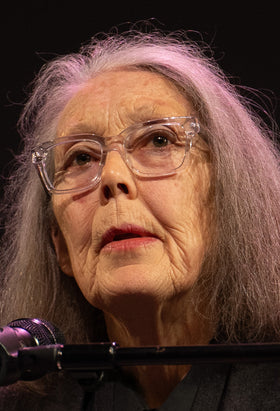
Anne Carson’s path to the 2026 Nobel Prize in Literature spans decades of poetry, Classics scholarship, translation, experimental books and major literary awards. The Swedish Academy announced Carson as the 2026 laureate on October 8, recognizing her “bold and inventive oeuvre” and its dialogue with classical tradition. citeturn0news16turn0search0

Anne Carson timeline at a glance
| Year | Milestone |
|---|---|
| 1950 | Born June 21 in Toronto, Ontario. |
| 1974 | Earned BA from the University of Toronto. |
| 1975 | Earned MA from the University of Toronto. |
| 1976 | Studied Classics at the University of St Andrews. |
| 1981 | Earned PhD from the University of Toronto. |
| 1986 | Eros the Bittersweet established Carson as a distinctive scholar-writer. |
| 1987 | Her long poem “Kinds of Water” helped launch her international poetry career. |
| 1996 | Received the Lannan Literary Award. |
| 1997 | Received a Pushcart Prize. |
| 1998 | Published Autobiography of Red; received a Guggenheim Fellowship. |
| 2000 | Received the MacArthur Fellowship. |
| 2001 | The Beauty of the Husband won the T. S. Eliot Prize; Carson also won the Griffin Poetry Prize. |
| 2002 | Published If Not, Winter: Fragments of Sappho. |
| 2005 | Published Decreation. |
| 2009 | Published An Oresteia. |
| 2013 | Published Red Doc>. |
| 2014 | Won the Griffin Poetry Prize for Red Doc>. |
| 2016 | Published Float, a work made of 22 chapbooks. |
| 2019 | Norma Jeane Baker of Troy brought Euripides and Marilyn Monroe together in a performance work. |
| 2020 | Received the Princess of Asturias Award for Literature. |
| 2024 | Wrong Norma became a National Book Award finalist. |
| 2026 | Won the Nobel Prize in Literature. |
1950: Anne Carson is born in Toronto
Anne Carson was born on June 21, 1950, in Toronto, Ontario. Her Canadian upbringing became the starting point for a career that would eventually connect North American contemporary literature with ancient Greek language and culture. citeturn0search1turn0search10
1974–1981: Education in Classics
Carson studied at St. Michael’s College at the University of Toronto, leaving twice before completing her BA in 1974, MA in 1975 and PhD in 1981. She also studied Greek metrics at the University of St Andrews in Scotland. citeturn0search1turn0search10
Her interest in ancient Greek began unusually early: a high-school Latin instructor helped her learn Greek during lunch breaks. That language became one of the most important foundations of her later writing and translation. citeturn0search10
1986: Eros the Bittersweet
Carson’s Eros the Bittersweet arrived in 1986. The work examines eros through ancient Greek literature, especially Sappho, and helped establish her unusual ability to combine rigorous Classics scholarship with literary invention. citeturn0search12turn0search11
1987: “Kinds of Water” and the emergence of a major poet
In 1987, Carson burst onto the international poetry scene with her long poem “Kinds of Water,” according to the Academy of American Poets and Georgetown’s Lannan Center. citeturn0search1turn0search10
1992–1995: A distinctive genre-crossing voice
Books including Glass, Irony, and God and Plainwater helped establish Carson as a writer who could move between poetry, essays, scholarship and classical material. The Poetry Foundation describes her publishing career as notably difficult to classify. citeturn0search12
1996–1998: Major awards and Autobiography of Red
Carson received the Lannan Literary Award in 1996 and a Pushcart Prize in 1997. In 1998, Autobiography of Red transformed an ancient Geryon story into a modern verse novel and Carson received a Guggenheim Fellowship. citeturn0search1turn0search11
Autobiography of Red became one of the defining books of her career because it demonstrated how classical myth could become contemporary literature without losing its ancient roots.
2000: MacArthur Fellowship
In 2000, Carson received a MacArthur Fellowship. The MacArthur Foundation described her as a Classics-trained scholar who had developed an independent voice as both poet and essayist. citeturn0search11
2001: A landmark year
Carson’s 2001 was particularly significant. The Beauty of the Husband: A Fictional Essay in 29 Tangos won the T. S. Eliot Prize, and Carson also received the Griffin Poetry Prize. The book further demonstrated her ability to mix poetry, narrative, essay and classical structures. citeturn0search1turn0search12
2002–2009: Translation becomes central
Carson’s translation career became increasingly prominent with works such as If Not, Winter: Fragments of Sappho, translations of Greek tragedy and An Oresteia. Her translations are important to understanding the later Nobel citation because the Academy specifically highlighted her Classical Greek translations as works with independent literary value. citeturn0news16turn0search1
2013–2016: Red Doc> and Float
Red Doc> appeared in 2013, returning to ideas and characters connected with Autobiography of Red. Carson won another Griffin Poetry Prize in 2014. In 2016, Float appeared as a collection of 22 chapbooks that can be read in different orders, a striking example of her interest in unconventional literary forms. citeturn0search1turn0news16
2019: Norma Jeane Baker of Troy
In 2019, Carson’s Norma Jeane Baker of Troy brought together Euripides’ Helen and the cultural figure of Marilyn Monroe. Reuters notes the work as an example of Carson’s ability to connect classical stories with modern subjects. citeturn0news16
2020: Princess of Asturias Award
Carson received the Princess of Asturias Award for Literature in 2020, adding one of the most prestigious international honors in literature to a career already marked by major poetry prizes and fellowships.
2024: Wrong Norma
Wrong Norma, published in 2024, became a National Book Award finalist. The collection shows that Carson’s experimental approach remained active decades into her career. citeturn0search1
October 8, 2026: Anne Carson wins the Nobel Prize
The Swedish Academy announced Carson as the 2026 Nobel Prize in Literature laureate on October 8, 2026. The official citation praised her bold and inventive body of work and its “playful dialogue” with classical tradition. citeturn0news16turn0search0
The Academy’s reasoning brings the timeline together: Carson spent decades moving between philology, poetry, translation and new literary forms. Her Nobel is therefore not an isolated late-career surprise; it is the culmination of a long experiment with what literature can be.
Why this timeline matters
Carson’s career is unusually coherent beneath its apparent variety. The same interests recur: ancient Greek, word origins, desire, myth, translation, fragments, visual form and the limits of genre. The Nobel citation recognizes precisely that combination. citeturn0news16
Official Nobel Prize social media embed
Follow the official Nobel Prize account for verified Nobel-related announcements and updates:
Posts by Nobel Prize
Anne Carson timeline FAQ
When was Anne Carson born?
June 21, 1950, in Toronto, Ontario, Canada. citeturn0search1
When did Anne Carson begin publishing?
Her publishing career began with Eros the Bittersweet in 1986, while her international poetry profile expanded with “Kinds of Water” in 1987. citeturn0search10turn0search12
When did Anne Carson win the Nobel Prize?
She was announced as the 2026 Nobel Prize in Literature laureate on October 8, 2026. citeturn0search0
What is the most important turning point in Carson’s career?
There is no single answer, but Autobiography of Red in 1998, the major awards around 2000–2001, and her continuing experiments with translation and book form were crucial milestones.
How did ancient Greek influence Anne Carson?
Ancient Greek shaped both her academic career and creative writing. She translates Greek literature and repeatedly uses myth, language and classical structures to build modern works. citeturn0search10turn0news16
Read more about Anne Carson
Read our related guides on her 2026 Nobel win, her biography, her awards and achievements, what her Nobel means for contemporary poetry, and the complete Anne Carson FAQ.
Bottom line
Anne Carson’s Nobel Prize timeline is a story of sustained experimentation. From ancient Greek studies in Toronto to internationally recognized poetry, translation, hybrid books and major awards, each stage built toward the literary identity the Swedish Academy honored in 2026.