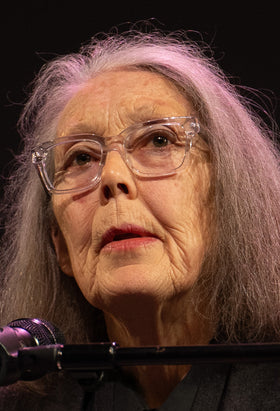
Anne Carson’s 2026 Nobel Prize in Literature is more than a lifetime achievement award. It is also a statement about where contemporary poetry can go next. The Swedish Academy honored Carson for a “bold and inventive oeuvre” that enters into playful dialogue with classical tradition while creating new forms for contemporary literature. citeturn0news5turn0search0

Why Anne Carson’s Nobel matters to contemporary poetry
Carson’s win matters because her career makes a strong argument against the idea that contemporary poetry must fit one recognizable shape. Her books can combine verse, prose, criticism, translation, mythology, visual design and performance. Reuters and the Associated Press both emphasized that genre-crossing quality in their coverage of the Nobel announcement. citeturn0news5turn0news6
The prize therefore recognizes not only individual poems or books, but a broader literary method: contemporary literature can be intellectually demanding, formally experimental and still connected to ancient traditions.
1. The Nobel validates poetry that crosses genres
Carson has spent decades making work that sits between categories. The Poetry Foundation describes her publishing career as “unclassifiable,” noting her poems, essays, libretti, prose criticism and verse novels. citeturn0search2
That matters in the wider poetry landscape. A reader opening one of Carson’s books may encounter a poem beside an essay, a translation, a dramatic scene or a visual structure. Instead of treating those forms as separate departments, Carson treats them as tools.
2. Her Nobel is a victory for the dialogue between Classics and modern literature
The Academy’s citation specifically points to Carson’s “playful dialogue with the classical tradition.” citeturn0news5
Her Classics training is central to that achievement. She learned ancient Greek as a student, earned advanced degrees in Classics at the University of Toronto and studied Greek metrics at the University of St Andrews. citeturn0search1
But Carson does not use the ancient world as decoration. She translates Sappho and Euripides, rewrites Greek myths and uses ancient forms to ask modern questions about love, identity, violence, memory and grief.
3. Autobiography of Red shows what this new literary model looks like
Perhaps the clearest example is Autobiography of Red. Carson takes the ancient Geryon story associated with Stesichorus and turns it into a modern verse novel. The result combines myth, coming-of-age narrative, poetry and contemporary emotional experience. citeturn0search2turn0search3
This is important because Carson does not simply “update” mythology. She lets an ancient story generate a new work with its own emotional and formal logic.
4. The Nobel also elevates literary translation
Translation occupies an unusual place in Carson’s career. Her translations of Sappho, Euripides and other classical writers are not treated merely as technical exercises. The Nobel coverage notes that her Classical Greek translations can stand as independent literary works. citeturn0news5turn0news6
That idea has broader implications. Translation can be creative writing. A translator is not only carrying words from one language to another; the translator is deciding how rhythm, ambiguity, silence and cultural distance will reach a new reader.
5. Fragments can become a modern literary form
Carson’s fascination with fragments is especially relevant to contemporary literature. Ancient Greek poetry often survives incompletely, and Carson does not pretend that the missing pieces are irrelevant.
In If Not, Winter: Fragments of Sappho, absence becomes part of the reading experience. In Nox, fragments, photographs, translation and memory create a physical structure for grief. The Associated Press described Nox as a sculptural literary object built around the death of Carson’s brother. citeturn0news6
6. Carson proves poetry can be scholarly without becoming inaccessible
Carson’s work asks readers to accept an unusual combination: serious scholarship and emotional intensity.
Her academic background does not sit outside her poetry. It gives her additional material. Ancient Greek words, etymologies, myths, philosophical arguments and historical figures can become part of a poem’s emotional architecture.
7. Her work expands the idea of the “poetry book”
A conventional poetry collection generally presents a sequence of poems. Carson repeatedly asks what happens if the book itself becomes an experiment.
Float, for example, consists of 22 chapbooks that can be read in different orders. The Nobel coverage cited it as an example of Carson’s interest in the literary sketch and alternative structures. citeturn0news5
Nox turns a book into something closer to an archival object. Decreation moves among poetry, prose, philosophy and dramatic forms. These are not gimmicks; the form becomes part of the subject.
8. The prize may introduce more readers to difficult poetry
Nobel prizes have a special ability to change reading habits. The Associated Press noted that the Literature Prize can introduce readers to writers and works beyond their usual languages or reading habits. citeturn0news6
That could be especially important for Carson. A reader who arrives because of the headline “Anne Carson wins Nobel Prize” may discover a body of work that rewards slower reading and curiosity rather than instant comprehension.
9. Carson represents a different idea of literary accessibility
Carson is not necessarily “easy” in the conventional sense. But difficult does not have to mean closed.
Her work often provides multiple entry points. A reader can approach Autobiography of Red as a story, Nox as a grief object, Eros the Bittersweet as intellectual nonfiction, or “The Glass Essay” as a poem about memory and literature.
That flexibility is one reason her work can reach readers with very different interests.
10. Her Nobel changes the conversation about contemporary poetry
The most interesting consequence of Carson’s Nobel may be what happens after the celebration. Writers and publishers now have a high-profile example of a poet being rewarded internationally for refusing to stay inside a single genre.
Her career suggests that contemporary poetry does not have to choose between tradition and innovation. It can use ancient literature and experimental form at the same time.
Anne Carson compared with a conventional literary model
| Traditional expectation | Carson’s approach |
|---|---|
| Poetry stays poetry | Poetry can become essay, story, translation or performance |
| Classics belong to the past | Ancient texts can generate contemporary literature |
| Translation is secondary | Translation can become an independent creative work |
| A book follows one structure | The physical form can become part of the meaning |
| Fragments are incomplete | Fragments can create meaning through absence |
What Carson’s Nobel means for future writers
Future writers may take a particularly important lesson from Carson’s career: literary innovation does not require abandoning tradition. Carson’s experiments work because she knows the traditions she is changing.
Her example also suggests that literary ambition can move in multiple directions at once. A writer can be a poet and scholar, translator and storyteller, classicist and contemporary artist.
Official Nobel Prize social feed
For official Nobel announcements and updates, the Nobel Prize X feed is embedded below. It uses the official public account rather than an unverified or fabricated social post.
Posts by Nobel Prize
Anne Carson Nobel Prize context FAQ
Why is Anne Carson’s Nobel Prize important?
It recognizes a career that has expanded contemporary literature through genre-crossing forms, classical scholarship, translation and experimentation.
What did the Nobel Academy say about Anne Carson?
The Swedish Academy praised her bold and inventive body of work and its playful dialogue with classical tradition, which has created new forms for contemporary literature. citeturn0news5
Is Anne Carson’s work difficult?
Some of it is challenging, but different books offer different entry points. Autobiography of Red is often a useful starting place for new readers.
How does Anne Carson use ancient Greek literature?
She translates ancient texts, adapts myths, studies language and uses classical material to explore contemporary questions.
What should I read first after her Nobel win?
Start with Autobiography of Red for a narrative introduction, then explore “The Glass Essay,” Nox or Eros the Bittersweet depending on your interests.
Read next
Continue with our guides to Anne Carson’s writing style, her relationship with ancient Greek literature, her Nobel reaction, and her awards and achievements before the Nobel.
Bottom line
Anne Carson’s 2026 Nobel Prize matters because it rewards a literary career built on crossing boundaries rather than defending them. She has shown that ancient Greek literature can be radically contemporary, that translation can be creative art, and that poetry can absorb scholarship, myth, prose, performance and visual form. For contemporary poetry, that is more than recognition. It is an invitation to keep experimenting.