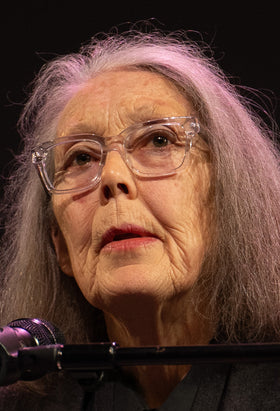
Anne Carson has spent decades explaining literature through short, surprising ideas about language, ancient Greek, books, art and the act of writing itself. After winning the 2026 Nobel Prize in Literature, interest in her interviews and comments has surged. The Swedish Academy praised her for creating new forms for contemporary literature through a playful dialogue with classical tradition. citeturn0news7turn0news8

Anne Carson’s Nobel reaction
When the Swedish Academy reached Carson in Iceland on October 8, 2026, she was described as very surprised. Ingrid Carlberg said Carson told the Academy that she was in Iceland “listening to the wind.” citeturn0news7
AP also reported that Carson reacted with humor, saying, “I think they’re all crazy.” citeturn0news8
Anne Carson on how she writes
One of Carson’s most revealing ideas is that she does not follow one fixed creative method. In a 2020 interview republished by Corriere della Sera after the Nobel announcement, Carson said that she has no habitual method and changes her approach from day to day. She also described drawing as a recent way of working because it allowed her to use more colors. citeturn0search4
“I don’t have a usual method. I change it from day to day.”
That comment helps explain why Carson’s bibliography looks so varied. A book may begin with a myth, a translation problem, an image, a scholarly question or an experiment with form.
Anne Carson on making a poem
In a CBC Radio One interview discussed by Reuters, Carson described making a poem as making an object. She said she had thought of poems more as drawings than texts, while still seeing language as the way readers physically enter those drawings. citeturn0news7
“I think of making a poem as making an object.”
This is one of the best ways to understand books such as Nox and Float. For Carson, page design, sequence, fragments and physical form can be part of literary meaning rather than decoration.
Anne Carson on ancient Greek
Carson’s relationship with ancient Greek began when a high-school Latin teacher offered to teach her Greek during lunch. In the interview preserved by La Lettura, Carson remembered those lunches as the beginning of a lifelong relationship with Sappho and Greek literature. citeturn0search4
That early encounter became a foundation for her later career as a Classics scholar, translator and writer. The Nobel Academy later highlighted the role of Classical Greek translation in her work. citeturn0news7
Anne Carson on Autobiography of Red
Carson has explained the unusual origin of Autobiography of Red in simple terms: a novelist friend challenged her to write a novel, and she wrote it in verse because she thought it would move faster. citeturn0search4
“A friend, a novelist, challenged me to write a novel.”
The result became one of her signature works: a contemporary verse novel inspired by the ancient Geryon story associated with Stesichorus. Its mixture of myth, identity, desire, photography and narrative captures Carson’s larger literary method.
Anne Carson on why she wrote about Geryon
Carson has also discussed the monster at the center of Autobiography of Red. In the 2020 interview, she described monstrosity as a timeless problem and connected Geryon’s sense of difference to the experience of people who feel that they themselves are outsiders. citeturn0search4
That perspective helps explain why the book continues to connect with contemporary readers even though its roots are in ancient literature.
Anne Carson on Proust
Carson’s relationship with Marcel Proust offers another window into her creative process. Reuters reported that she spent seven years reading In Search of Lost Time and experienced what she described as withdrawal after finishing it. That feeling helped lead to The Albertine Workout, her own extended engagement with Proust’s Albertine. citeturn0news7
“You think life goes on after Proust, but it seems so grey.”
It is a revealing example of Carson turning reading itself into material for writing.
Anne Carson on choosing subjects
Asked why she writes about particular personal subjects, Carson has said that the subjects choose the writer rather than the writer simply choosing them. citeturn0search4
“The subjects choose us.”
That idea fits her career unusually well. Her books move from Sappho and Greek tragedy to Proust, Marilyn Monroe, family grief and contemporary identity without requiring one fixed genre.
Anne Carson on drawing, images and visual art
Carson has repeatedly connected writing with visual art. In the 2020 interview, she discussed drawing and described her literary work as influenced by the visual arts, music and philosophy. citeturn0search4
Reuters also reported that Carson considers herself a visual artist as well as a literary artist. citeturn0news7
What these quotes reveal about Anne Carson’s writing
- She does not depend on one method. Her creative process changes with the project.
- She treats poems as objects. Visual structure and physical form can matter.
- She reads deeply. Proust, Sappho and classical literature can become creative material.
- She embraces hybrid forms. Verse, prose, translation and scholarship can coexist.
- She follows difficult questions. Myth, monstrosity, desire, grief and identity recur across her work.
Official Nobel Prize social media post
The Nobel Prize published the official announcement on its X account. The verified post is embedded below rather than using an unverified screenshot or copied social-media image.
Nobel Prize announcement of Anne Carson as the 2026 Nobel Prize in Literature laureate
Why these interviews matter after the Nobel
The most interesting thing about Carson’s comments is how consistent they are with the Nobel citation. The Academy praised her dialogue with classical tradition and her creation of new literary forms; Carson’s own interviews show a writer who treats language, images, translation and reading as active creative processes. citeturn0news7turn0news8
Anne Carson quotes and interviews FAQ
What did Anne Carson say when she won the Nobel Prize?
The Academy said Carson was very surprised and was in Iceland “listening to the wind.” AP also reported her humorous reaction that she thought the people behind the prize were crazy. citeturn0news7turn0news8
What has Anne Carson said about writing?
She has described poems as objects and has said that she changes her creative method from day to day rather than following one fixed process. citeturn0news7turn0search4
What did Anne Carson say about ancient Greek?
She has described learning ancient Greek from her Latin teacher during high-school lunch breaks, an experience that became an important beginning for her literary career. citeturn0search4
Why did Anne Carson write Autobiography of Red?
She has said that a novelist friend challenged her to write a novel, and she chose verse as the form. The book then developed into a modern reworking of the Geryon myth. citeturn0search4
What does Anne Carson mean by making a poem an object?
She has described poems as drawings or objects that readers enter through language, an idea reflected in her experiments with physical and visual book forms. citeturn0news7
Read more about Anne Carson
Continue with our Nobel reaction report, writing style guide, career timeline, and complete FAQ.
Bottom line
Anne Carson’s interviews reveal a writer who follows curiosity rather than a rigid formula. Her comments about ancient Greek, drawing, Proust, Geryon and the physical nature of poems make her 2026 Nobel Prize easier to understand: Carson has spent a lifetime turning reading, language and form into creative experiments.