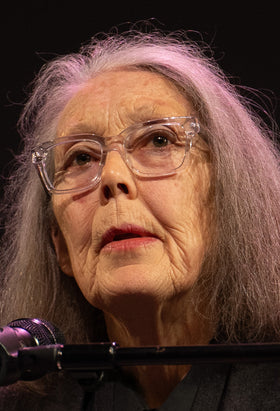
Anne Carson’s 2026 Nobel Prize in Literature stands out because she does not fit neatly into one literary category. Unlike a conventional novelist or poet, Carson has built a career across poetry, prose, translation, Classics scholarship, mythology and experimental book forms. The Swedish Academy honored her for a “bold and inventive oeuvre” that creates new forms through dialogue with classical tradition. citeturn0news13turn0news1

Anne Carson vs other Nobel Literature winners: quick comparison
| Writer | Known primarily for | What distinguishes Carson |
|---|---|---|
| Anne Carson, 2026 | Poetry, translation, Classics, hybrid literature | Moves deliberately between poetry, prose, scholarship, myth and visual form. |
| László Krasznahorkai, 2025 | Novels and long-form prose | Carson’s work is more fragmented and formally hybrid. |
| Han Kang, 2024 | Poetic prose and fiction | Carson combines original writing with ancient-language scholarship and translation. |
| Jon Fosse, 2023 | Drama and prose | Carson’s practice extends more explicitly into Classics, translation and experimental book objects. |
| Louise Glück, 2020 | Poetry | Both are major poets, but Carson more visibly mixes scholarship, translation and genre forms. |
What makes Anne Carson different?
The simplest answer is range with a recognizable method. Carson can write a poem, translate Sappho, reinterpret a Greek myth, construct a book from fragments, or place scholarship beside personal experience without treating those activities as separate careers.
That is exactly what the Academy emphasized. Its citation connects her classical tradition to the creation of new forms for contemporary literature, while recent reporting highlights her movement among verse, prose, dialogue and translation. citeturn0news13turn0news1
Anne Carson vs László Krasznahorkai
The 2025 Nobel laureate László Krasznahorkai was recognized for a powerful prose oeuvre. Carson arrives one year later with a very different formal profile. Reuters notes that the Academy’s praise of Carson centers on her genre-defying mixture of literary forms. citeturn0news13
The contrast is useful: contemporary Nobel literature does not have one preferred shape. Krasznahorkai demonstrates the possibilities of sustained prose; Carson demonstrates what happens when the borders between literary forms become material for experimentation.
Anne Carson vs Han Kang
Han Kang won the 2024 Nobel Prize in Literature for prose marked by poetic intensity and attention to historical trauma and human vulnerability. Carson’s work also uses poetry and prose together, but she adds another dimension: classical philology and translation.
Carson’s relationship with ancient Greek texts means that the past is not simply a theme. It is part of her working method. Her translations can become literary creations in their own right, a quality specifically highlighted by the Nobel committee. citeturn0news1turn0news13
Anne Carson vs Jon Fosse
Jon Fosse, the 2023 Nobel laureate, is closely associated with innovative drama and prose. Carson is similarly interested in what language can do when conventional narrative structures are loosened.
But Carson’s experiments often begin with material from the ancient world. Autobiography of Red reimagines Geryon and Herakles; Norma Jeane Baker of Troy connects Euripides with Marilyn Monroe; and Float uses 22 chapbooks that can be read in different orders. citeturn0news13
Anne Carson vs Louise Glück
Louise Glück, the 2020 Nobel laureate, is the clearest recent comparison if the question is simply, “Is Carson a poet?” Both writers demonstrate how poetry can achieve enormous literary influence without depending on conventional narrative.
The difference is Carson’s unusually broad literary toolkit. Her poetry can coexist with translation, classical scholarship, criticism, performance and book design. The Guardian’s Nobel coverage identified Glück as the last laureate known foremost for poetry before Carson. citeturn0search9
Carson’s biggest difference: she makes Classics contemporary
Many writers use mythology. Carson goes further by treating classical texts as active material that can be translated, dismantled, rearranged and rebuilt.
Her training in ancient Greek and Classics is central to this process. The Nobel committee described her work as a dialogue with classical tradition rather than a simple return to it. citeturn0news13
Autobiography of Red: the clearest example
Autobiography of Red takes the ancient Geryon story and turns it into a contemporary verse novel. This is not merely a modern retelling. Carson changes genre, setting and emotional emphasis while preserving the mythic pressure of the original story.
Translation is not a side project for Carson
Another distinction is Carson’s status as both translator and original writer. The Academy specifically noted that her Classical Greek translations can be regarded as independent works of art. citeturn0news13
In Carson’s career, translation is not simply a bridge to another writer; it is another way of writing.
Her books challenge the idea of a normal literary book
Nox turns grief, fragments, images and translation into an unusual physical reading experience. Float consists of 22 chapbooks. These choices make the form of the book part of its meaning.
Why the Nobel choice is significant
Carson’s selection shows that the Nobel committee can recognize literary achievement that is difficult to classify. The award is not simply a prize for “poetry”; it recognizes a body of work that has repeatedly questioned the boundaries of literature. citeturn0news13turn0news1
What Carson has in common with other Nobel winners
- Literary originality: Carson developed a highly recognizable voice.
- Formal experimentation: Her work challenges conventional literary categories.
- Global literary conversation: Her writing connects Canadian, European and ancient Mediterranean traditions.
- Long-term achievement: The prize recognizes a body of work rather than one isolated publication.
Official Nobel Prize social media embed
For verified Nobel announcements and updates, this article uses the official Nobel Prize X feed rather than an unverified or fabricated social post.
Posts by Nobel Prize
Anne Carson vs Nobel winners FAQ
What makes Anne Carson different from other Nobel Prize winners?
Her unusually visible combination of poetry, prose, ancient Greek scholarship, translation, mythology and experimental book forms makes her distinctive.
Is Anne Carson mainly a poet?
She is a poet, but that label alone is incomplete. She is also an essayist, translator, Classics scholar and writer of hybrid literary works.
Who was the previous Nobel Literature winner before Anne Carson?
László Krasznahorkai won the 2025 Nobel Prize in Literature; Han Kang won in 2024 and Jon Fosse in 2023. citeturn0news13turn0search8
Was Louise Glück the last Nobel winner primarily known as a poet before Carson?
Yes. The Guardian’s 2026 Nobel coverage identified Louise Glück, the 2020 laureate, as the last winner known foremost for poetry before Carson. citeturn0search9
Why is ancient Greek so important to Carson?
Ancient Greek is both a scholarly foundation and a creative source. She translates classical texts and uses their myths, language and structures to build contemporary literature.
Read more about Anne Carson
Continue with our guides to what her Nobel means for contemporary poetry, her complete career timeline, the Anne Carson FAQ, and 10 essential books to read.
Bottom line
Anne Carson is different not because she rejects literary tradition, but because she uses tradition as raw material for invention. Her 2026 Nobel Prize places poetry, Classics, translation and experimental literature at the center of a global literary conversation.