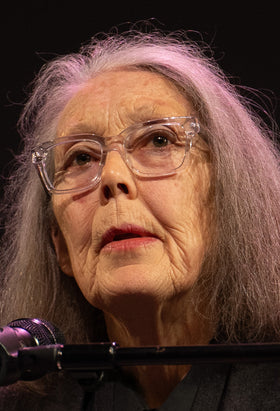
Anne Carson has won the 2026 Nobel Prize in Literature, and one of the biggest questions now is simple: which Anne Carson book should you read first? The Canadian poet, essayist, classicist and translator has spent decades making ancient Greek literature feel strangely close to modern life. Her books move between poetry, fiction, criticism, translation, drama and visual experimentation, which is exactly why choosing a starting point can feel intimidating.

The Swedish Academy honored Carson “for her bold and inventive oeuvre that, in playful dialogue with the classical tradition, has created new forms for contemporary literature.” Reuters reported that her work is known for blending verse, prose, dialogue and translation, while the Nobel recognition also highlights the unusual way she turns classical material into contemporary literature.
What Anne Carson book should you read first?
If you want one answer, start with Autobiography of Red. It is probably the clearest doorway into Carson's imagination because it combines myth, poetry, narrative, desire, humor and heartbreak without behaving like a conventional novel or poetry collection.
Penguin Random House describes Autobiography of Red as a work that is simultaneously a novel and a poem, reworking an ancient Greek myth into an original coming-of-age story. The book follows Geryon, a winged red monster, as he grows up, falls in love with Herakles and tries to understand the strange shape of his own identity.
10 essential Anne Carson books to read after her Nobel win
1. Autobiography of Red
Best for: first-time readers, literary fiction fans, poetry readers and myth lovers.
Autobiography of Red is the book most likely to make a new reader understand why Carson is so difficult to categorize. It begins with the ancient Greek poet Stesichorus and the myth of Geryon, then transforms that material into a modern emotional story.
What makes the book special is its ability to feel intellectually ambitious without becoming emotionally distant. Geryon's mythology becomes a language for loneliness, first love, photography, family damage and the painful process of becoming yourself.
2. Red Doc>
Best for: readers who finish Autobiography of Red and want something stranger.
Red Doc> returns to the emotional universe of Geryon and Herakles, but Carson refuses to simply repeat the earlier book. The language becomes more fragmented, the identities shift, and the story feels closer to a dream, screenplay or broken conversation than a conventional sequel.
3. The Beauty of the Husband: A Fictional Essay in 29 Tangos
Best for: readers interested in love, marriage, betrayal and literary experimentation.
This book uses the structure of 29 “tangos” to examine a collapsing relationship. Carson calls it a fictional essay, which immediately tells you that the usual labels are not going to be enough.
The result is intellectually playful but emotionally serious. The book is particularly useful for readers who want to see how Carson can turn a personal subject into a literary investigation rather than a straightforward memoir.
4. Men in the Off Hours
Best for: readers who like historical figures, fragments and surprising connections.
Men in the Off Hours is one of the best examples of Carson's ability to put different centuries in conversation. The book moves through poems and prose while bringing historical, literary and personal subjects into unexpected proximity.
Rather than offering a single continuous narrative, Carson creates a literary collage. That approach can feel disorienting at first, but it also explains why her work continues to reward rereading.
5. Nox
Best for: readers looking for Carson at her most personal and visually experimental.
Nox is a deeply personal work built around Carson's grief after the death of her brother. It is also an unusual physical object, designed as an accordion-style facsimile box that brings together fragments, photographs, translations and writing.
The book shows another side of Carson's work: the idea that literature does not have to live only on a conventional page. Memory, family history and translation become part of the physical design.
6. Float
Best for: readers who want maximum Carson experimentation.
Float is a collection of short works presented in a deliberately unconventional structure. Some pieces feel like miniature essays, some resemble prose poems, and others operate almost like literary objects.
For readers who are curious about why the Nobel committee described Carson's work as creating “new forms,” Float is particularly revealing. It demonstrates how she treats form itself as part of the subject.
7. Glass, Irony and God
Best for: readers who want poetry with philosophical and spiritual questions.
This collection brings together some of Carson's most memorable explorations of desire, language, faith, gender and human vulnerability. It is a strong choice if your interest in the Nobel win is primarily about Carson as a poet rather than Carson as a myth-maker.
It also demonstrates how Carson can move from a seemingly abstract idea to a sharply emotional moment without announcing the transition.
8. Decreation
Best for: experienced poetry readers who want Carson at her most intellectually ambitious.
Decreation is not the book I would recommend to everyone as a first introduction. But once you understand Carson's habits of thought, it becomes an important part of the picture.
The book crosses poetry, prose, philosophy and spiritual inquiry. Its title points toward a fascination with undoing the self, a subject that connects Carson's literary experiments with larger questions about identity and consciousness.
9. Wrong Norma
Best for: readers who want Carson's later work and a sharper contemporary voice.
Wrong Norma is a collection of poetic prose pieces that moves across subjects including literature, history, poverty, family and everyday life. New Directions describes the collection as deliberately disconnected: the pieces are “wrong” because they are not designed to form a conventional unified book.
That resistance to neat structure is classic Carson. The book also matters because it shows that her experimental style was not simply a feature of her early career; she continued pushing against literary expectations decades later.
10. If Not, Winter: Fragments of Sappho
Best for: readers who want to understand Carson's relationship with ancient Greek literature.
This is the book to read if the Nobel committee's reference to Carson's dialogue with the classical tradition makes you curious about the scholarship behind her poetry.
Carson translated fragments of the ancient Greek poet Sappho, preserving the gaps and damaged portions that are central to the surviving texts. The result is not simply a translation exercise; it is an encounter between an ancient voice, missing language and a modern poet who is acutely aware of what translation can and cannot recover.
Why Autobiography of Red matters so much after the Nobel
The renewed interest in Autobiography of Red is not simply because it is one of Carson's most famous books. It gives readers a compact demonstration of the qualities that now define the Nobel laureate's public literary reputation.
First, it is rooted in classical literature. Second, it refuses to stay inside one genre. Third, it makes an ancient story emotionally recognizable without turning it into a simple modern retelling.
Anne Carson's books are not all meant to be read the same way
One mistake new readers can make is assuming every Carson book is supposed to behave like a conventional poetry collection. It isn't.
Some books ask you to follow a story. Others ask you to notice fragments. Some depend on the visual design of the page or book object. Others are closer to scholarly translation. The connecting thread is Carson's willingness to change the rules when the material demands it.
Where should a new reader go next?
If the Nobel announcement has made you curious but you have never read Carson before, there is no need to start with the most difficult book.
- Start with Autobiography of Red for the clearest introduction.
- Read Red Doc> if you want to see how Carson transforms the same literary world.
- Try Glass, Irony and God if poetry is your main interest.
- Read If Not, Winter if the ancient Greek connection interests you most.
- Choose Nox if you want the most personal and visually distinctive experience.
For a broader introduction to Carson's life and career, read our earlier guide, Who Is Anne Carson? Biography, Career, Books and Literary Legacy. You can also read our explanation of why Anne Carson won the 2026 Nobel Prize in Literature and our breaking-news report on Anne Carson's 2026 Nobel Prize win.
Anne Carson's Nobel moment and the renewed reading list
The 2026 Nobel Prize changes the context in which readers encounter Carson, but it does not change the books themselves. That is part of what makes the moment interesting.
A reader opening Autobiography of Red today is not simply discovering an award-winning poet. They are entering the work of a writer whose career has connected ancient Greek texts with contemporary poetry, fiction, criticism, translation and experimental forms.
Official Nobel Prize social feed
For readers following the latest Nobel announcements and official updates, the Nobel Prize's public X account is a useful live source. X supports embedded posts and public timelines directly on websites.
Posts by Nobel Prize
Anne Carson books: quick answers
What is Anne Carson's most famous book?
Autobiography of Red is widely regarded as one of Carson's signature works. It combines poetry, fiction and ancient Greek myth in a modern story about Geryon and Herakles.
Which Anne Carson book should beginners read?
Autobiography of Red is the strongest general starting point because it is relatively short, narrative-driven and representative of Carson's interest in myth, poetry and unconventional literary forms.
Is Anne Carson a poet or a novelist?
She is best understood as a poet, classicist, translator and writer who deliberately crosses genres. Her bibliography includes poetry, prose, verse novels, translations, essays and dramatic works.
Why is Anne Carson connected to ancient Greek literature?
Carson is a scholar of Classics and has translated major ancient Greek works, including Sappho fragments, Electra and An Oresteia. Her own writing frequently adapts or converses with classical texts.
What should I read after Autobiography of Red?
Try Red Doc> next if you want a continuation of Carson's Geryon-centered literary world. If you want something more personal, choose Nox; if you want more poetry, try Glass, Irony and God.
Bottom line
Anne Carson's Nobel win is likely to send first-time readers toward her books. The best response is not to search for one “correct” Carson book. Start with Autobiography of Red, then follow your curiosity: myth, poetry, translation, grief, philosophy, visual art or literary experiment.
That variety is not a side feature of Carson's career. It is the point. Her work repeatedly asks what literature can become when an ancient text, a modern life and a restless imagination are allowed to occupy the same page.