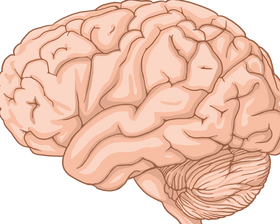
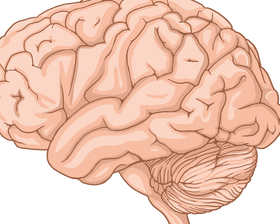
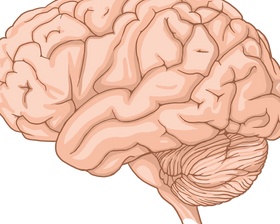
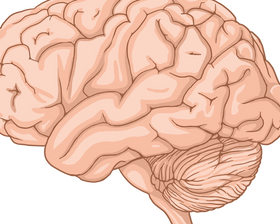
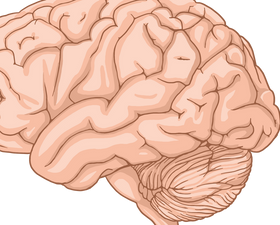
Thinking, intelligence and consciousness are complex phenomena produced by interacting neural systems.
How It Works
Thinking can involve attention, working memory, language, mental imagery, planning and decision-making. Prefrontal and parietal networks are important for many demanding cognitive tasks.
Key Facts
Intelligence is studied through reasoning, learning, problem-solving and adaptation. Consciousness includes wakefulness and awareness and depends on interacting arousal and higher-order systems.
Why It Matters
Scientists can measure neural activity associated with cognition, but a complete explanation of subjective experience remains an open research question.
Quick Answer
This topic is best understood as part of an interconnected nervous system. Current neuroscience supports specialized functions but also emphasizes communication among distributed brain networks.
FAQs
Is the brain made of independent parts?
No. Different regions have specialized roles, but complex functions normally depend on coordinated networks.
Can brain function change?
Yes. Development, learning, experience and some forms of injury can produce changes in neural circuits through neuroplasticity.
Sources
NCBI Bookshelf · NIH NICHD Neuroscience · BrainFacts
Brain Science Video
Watch a BrainFacts overview of human brain anatomy and neuroscience:
Further Reading
BrainFacts.org provides editorially independent brain and nervous-system information from the Society for Neuroscience.
BrainFactsBrain Science Video
Watch a BrainFacts overview of human brain anatomy and neuroscience.